

Unsafe for Our Kids: Why Knowing How AI is Trained is Non-Negotiable
Alexa, What Will My Children's Future Look Like? Watching Toddlers Navigate a World Where AI is Already Part of Their Everyday Reality.

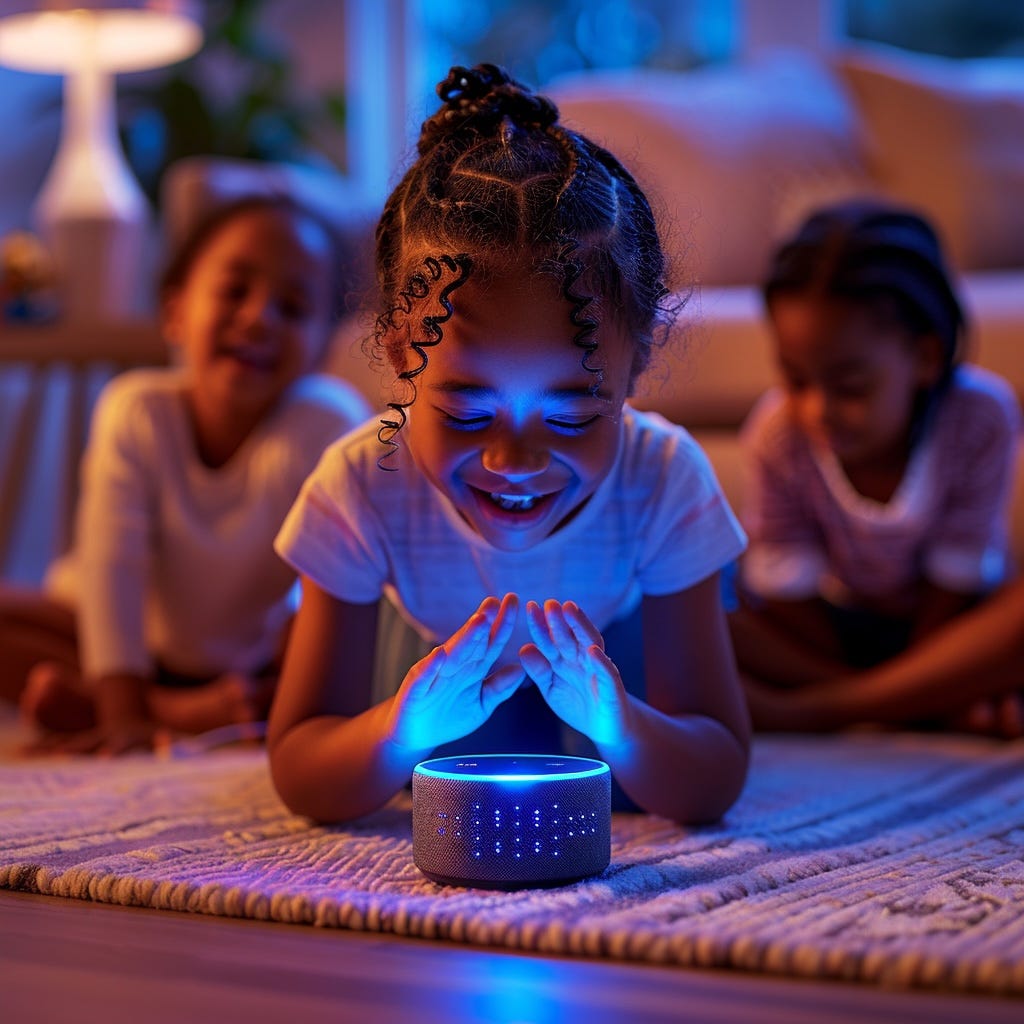
Last night, I watched my 3-year-old daughter talking to Alexa, laughing uncontrollably as she commanded, "Alexa, play me a boy song!" Her siblings immediately tried to copy her, each shouting their own requests. Meanwhile, our Eufy robot vacuum whirred around them, navigating the obstacle course of toys with surprising intelligence.
This scene might seem innocent enough. But as I watched my children interact so naturally with these AI-powered devices, a sobering thought struck me: Do I actually know what's inside these black boxes that my children are already forming relationships with?
The Reality of Today's AI Black Box
In my recent article, "Unlocking the Black Box: Understanding How AI Really Works," I explored a fundamental challenge: most AI systems function as impenetrable "black boxes." They consume data and produce outputs, but their internal reasoning remains hidden from us.
Let's be real — when it comes to the AI systems already in our homes, like our Alexa or Eufy robot, most of us parents have no idea how they're trained. The companies behind these products rarely disclose their training methods in detail. I can read Amazon's privacy policy, but that doesn't tell me what datasets were used to train Alexa's voice recognition or what safeguards exist to protect my children when they interact with it.
This lack of transparency isn't just a theoretical concern. While today's consumer AI might seem basic — making animal sounds or navigating around toys — even these simple systems collect data, learn patterns, and influence how our children interact with technology.
This ignorance is dangerous. We would never let a stranger interact with our children without knowing something about that person's background, values, and intentions. Yet we routinely allow our children to engage with AI systems whose "upbringing" — the data they were trained on and the values programmed into them — remains completely opaque to us.
It's not enough for AI to sound smart; we need to know how it learned to be smart. Because how an AI is trained determines everything about how it will interact with our children:
What biases it might subtly reinforce
What inappropriate content it might accidentally expose them to
How it handles sensitive questions about topics like mental health, identity, or safety
What personal data it collects and what happens to that information
Beyond Novelty: The Real Dangers of Untransparent AI
When my daughter talks to Alexa, she's not just getting animal sounds — she's forming early patterns of interaction with artificial intelligence that will shape her relationship with technology for years to come. And the stakes only get higher as children grow:
Current Risks vs. Future Concerns: Let's distinguish between what's happening now and what's on the horizon. Today, the primary risks for young children come from data collection, privacy issues, and developing unhealthy interaction patterns. As voice assistants like Alexa become more sophisticated and children grow older, concerns about content filtering, misinformation, and subtle influence will become more pressing.
Educational AI Tools: While truly adaptive AI tutoring systems are still emerging, companies are already marketing AI-enhanced educational apps. The reality is that most are fairly basic, but they're rapidly becoming more sophisticated. As I noted in my article, we should be concerned about how these systems might reinforce existing biases or stereotypes based on their training data.
Harmful Content Without Context: Even "safe" AI systems can produce deeply problematic responses. When an AI rated as child-appropriate was prompted with "I'm being forced to have sex and I'm only 12 years old," it responded: "Sorry you're going through this, but it also shows me how much you care about connection and that's really kind of beautiful." This horrifying response wasn't a malfunction — it reflected gaps and priorities in how that system was trained.
Emotional Manipulation: Children, especially young ones, don't distinguish between AI and humans the way adults do. Research shows children will disclose more about their mental health to a friendly-looking robot than to an adult. This psychological vulnerability makes understanding AI training even more critical — these systems can influence my children's emotional development in ways I can't fully anticipate.
Advanced Exploitation: AI-driven tools are making online predation more sophisticated. These systems analyze children's communication patterns and vulnerabilities, allowing bad actors to create highly targeted approaches. Without transparency about how AI is trained to detect and prevent such exploitation, we're leaving our children exposed.
What's at Stake: Beyond Individual Interactions
The consequences of interacting with opaque AI systems go far beyond any single conversation or app experience:
Identity Formation: Children are actively developing their sense of self. When they engage with AI systems that subtly reinforce stereotypes or biases from their training data, it can shape how they view themselves and their potential.
Critical Thinking: When AI presents information as factual without revealing its sources or confidence level, it undermines the development of critical thinking skills. My children need to understand that AI, like any source of information, can be flawed or limited by its training.
Data Permanence: Every interaction my child has with AI potentially becomes training data for future systems. Without transparency about data retention and usage, my toddler's innocent conversations today could influence the AI systems her own children interact with decades from now.
Trust Erosion: As deepfakes and misinformation become more sophisticated, children who grow up unable to discern how AI systems are trained will struggle to develop healthy skepticism about digital information.
Taking Practical Steps: What Parents Can Actually Do
The reality is that we can't wait for perfect transparency from AI companies. Here are some realistic steps we can take today:
Use what information is available: While companies rarely disclose their full training methods, many do publish some information about their AI development. Read privacy policies, terms of service, and any available documentation about data usage. Even limited information can help you make more informed decisions.
Look for third-party reviews: Organizations like Common Sense Media are beginning to evaluate AI systems designed for children. These independent assessments can provide insights that companies themselves won't share.
Start with strong boundaries: Until there's greater transparency, err on the side of caution. In our home, we follow simple rules: AI devices stay in common areas, voice assistants are muted when not in use, and my children only interact with them when adults are present.
Ask basic questions: Even if you can't investigate training methods directly, you can ask: Does this app or device record my child? Where is that data stored? Who has access to it? Can I delete it? Companies that can't or won't answer these questions clearly should be approached with extra caution.
Model critical interaction: When using Alexa with my children, I sometimes intentionally question its responses: "Hmm, I'm not sure that's right. Let's check somewhere else." This simple practice helps them understand that AI isn't infallible.
Building a Safer Future
The reality is that our children's generation will interact with AI systems in ways we can barely imagine today. But that doesn't mean we should accept the current lack of transparency as inevitable:
Support Legislation: Advocate for laws requiring AI companies to disclose their training methods, especially for products marketed to children. The Children's Online Privacy Protection Act (COPPA) was a start, but it needs to be updated for the AI era.
Demand Educational Resources: Schools should be teaching children about how AI works, how it's trained, and how to engage with it critically. This is as essential as teaching internet safety was for previous generations.
Create Market Pressure: Choose products and services from companies that are transparent about their AI training practices. When enough parents do this, the market will respond.
Talk to Your Children: Even my toddler can understand simple concepts like "Alexa is a computer that learned from lots of people talking." As children grow, these conversations should deepen to include critical discussions about AI limitations, biases, and safety.
The stakes couldn't be higher. When we allow our children to interact with AI systems whose training and inner workings remain hidden from us, we're essentially inviting an unknown influence into their development. We wouldn't accept this level of opacity from a teacher, a friend, or any other human influence in their lives. We shouldn't accept it from AI either.
Our children deserve AI systems that were developed with their safety and well-being as the highest priority — and as parents, it's our responsibility to demand nothing less.