

Unlocking the Black Box: Understanding How AI Really Works
How Scientists Are Unraveling the Mystery of AI’s Decision-Making.

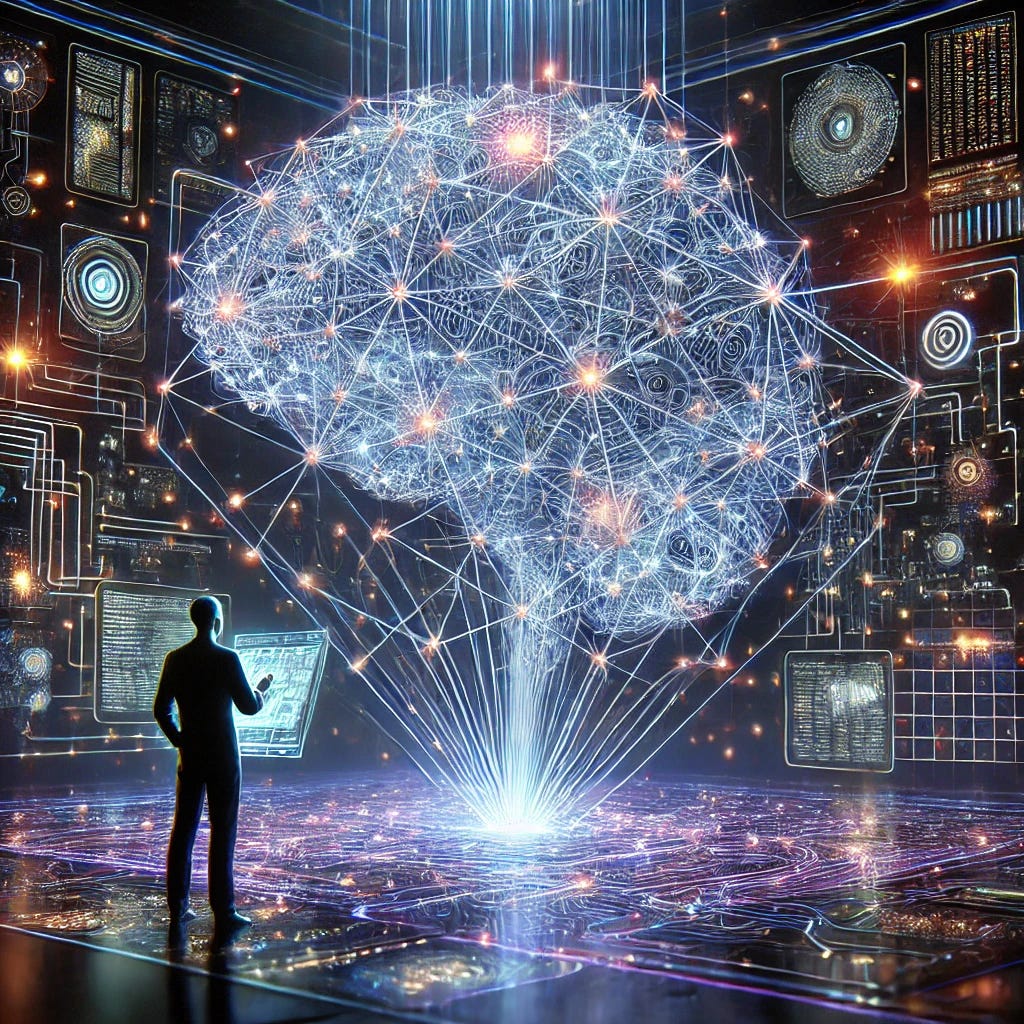
AI is Powerful—But Do We Really Understand It?
Artificial intelligence is shaping the world around us. It can diagnose diseases, analyze financial risks, and even generate human-like conversations. But for all its intelligence, there’s one big problem:
❓ We don’t actually know how it makes decisions.
Unlike a calculator, where we know exactly how each operation works, AI models—especially deep neural networks—function like a black box. They take in data and produce results, but their inner logic remains hidden.
This isn’t just an academic issue. When AI decides who qualifies for a loan, how a self-driving car reacts in traffic, or whether an online post is flagged as misinformation, we need to trust that it’s making fair and reasonable choices.
That’s where researchers at FAR.AI come in.
Their latest work on mechanistic interpretability is an attempt to crack open the black box and figure out exactly how AI systems process information. The goal? To understand AI at a deep, mechanistic level—not just surface-level guesswork, but a real breakdown of how AI’s internal parts work together.
Let’s dive into what they’ve discovered.
What is Mechanistic Interpretability?
Mechanistic interpretability is AI detective work. It’s the process of reverse-engineering neural networks—just like taking apart an engine to understand how it powers a car.
The key questions FAR.AI researchers are trying to answer:
🔹 What are the different components inside an AI model doing?
🔹 How do these components interact to produce a decision?
🔹 Can we map AI’s “thought process” to human-understandable reasoning?
Unlike traditional software, where a programmer writes clear instructions, AI learns from vast amounts of data. This means it develops its own internal logic, often in ways we don’t expect or fully understand.
Think of it like finding an ancient text written in an unknown language. We can see the symbols (the AI’s outputs), but we don’t know what rules govern how the text was written. Mechanistic interpretability is like trying to decode that language—uncovering the hidden patterns AI follows when making decisions.
Why This Research Matters
Understanding AI isn’t just an intellectual pursuit. It has real-world consequences in areas like:
Safety
🚨 AI is already being used in criminal justice, hiring, finance, and medicine. If we don’t know how it makes decisions, we can’t prevent bias, discrimination, or dangerous errors.
For example, what if an AI-powered hiring system automatically rejects certain candidates based on patterns we don’t understand? If we can decode its reasoning, we can fix these biases before they cause harm.
Control
⚙️ AI is incredibly powerful, but without understanding its inner workings, we can’t fully control it. If we crack open the black box, we can adjust AI models, improve them, and ensure they align with human values.
Predictability
📊 One of the biggest concerns with AI is unexpected behavior. If we understand its internal logic, we can predict how it will react in new situations, reducing failures and improving reliability.
Model Improvement
🔍 If we can see how AI learns, we can build better, more efficient models. This could lead to AI systems that require less data, make fewer mistakes, and perform better across different tasks.
Scientific Discovery
📖 AI can detect patterns that humans might miss. If we can interpret its findings, we might discover new scientific insights—whether in medicine, finance, or other fields.
The Challenges: Why AI is Hard to Interpret
FAR.AI’s research highlights several big problems in mechanistic interpretability:
Neural Networks Don’t Have Clear Parts
Unlike a car engine, which has separate, well-defined parts, AI models are highly interconnected. A single neuron in an AI network might be involved in multiple tasks at once, making it difficult to isolate its function.
Right now, researchers don’t have a standardized way to separate AI into meaningful components, which makes interpretation extremely challenging.
Interpretability Illusions
🔍 What if an explanation of AI’s behavior seems right—but is actually wrong?
This happens all the time. Sometimes, researchers think they’ve figured out how an AI makes decisions, only to realize later that the model was relying on an unrelated pattern or shortcut.
This is a huge problem because it means we might think we understand AI when we actually don’t. FAR.AI’s research stresses the importance of verifying AI explanations rigorously.
Scaling to Large Models
Modern AI models—like ChatGPT and Google Gemini—are massive, with billions of parameters. Current interpretability techniques struggle to scale, meaning we can only analyze small parts of these models at a time.
Researchers need better tools to make sense of these increasingly complex systems.
What Does “Success” Look Like?
There’s no universal agreement on how to measure success in mechanistic interpretability. Should we focus on accuracy? Usefulness in real-world applications? Alignment with human reasoning?
FAR.AI’s work is helping to define clear goals for the field, but there’s still a long way to go.
What’s Next for AI Transparency?
FAR.AI’s research is pushing the field forward by developing new ways to:
✅ Break AI models into meaningful parts.
✅ Verify that our explanations are actually correct.
✅ Scale interpretability methods to modern AI systems.
The ultimate goal is to make AI fully understandable, so we can trust it, control it, and improve it.
AI is becoming more powerful every day. If we don’t figure out how it works now, we risk creating systems that we can’t fully control or correct.
Mechanistic interpretability is the key to unlocking AI’s true potential—safely and responsibly.
🚀 Want to go deeper? Read FAR.AI’s full research here:
If you found this helpful, share it—because the future of AI shouldn’t be a mystery.