

Navigating the Future: Preparing for the AI-Driven Evolution of Coding
Preparing for the AI Revolution: Adapting Your Skills in a World Without Code

The Firestorm at Amazon
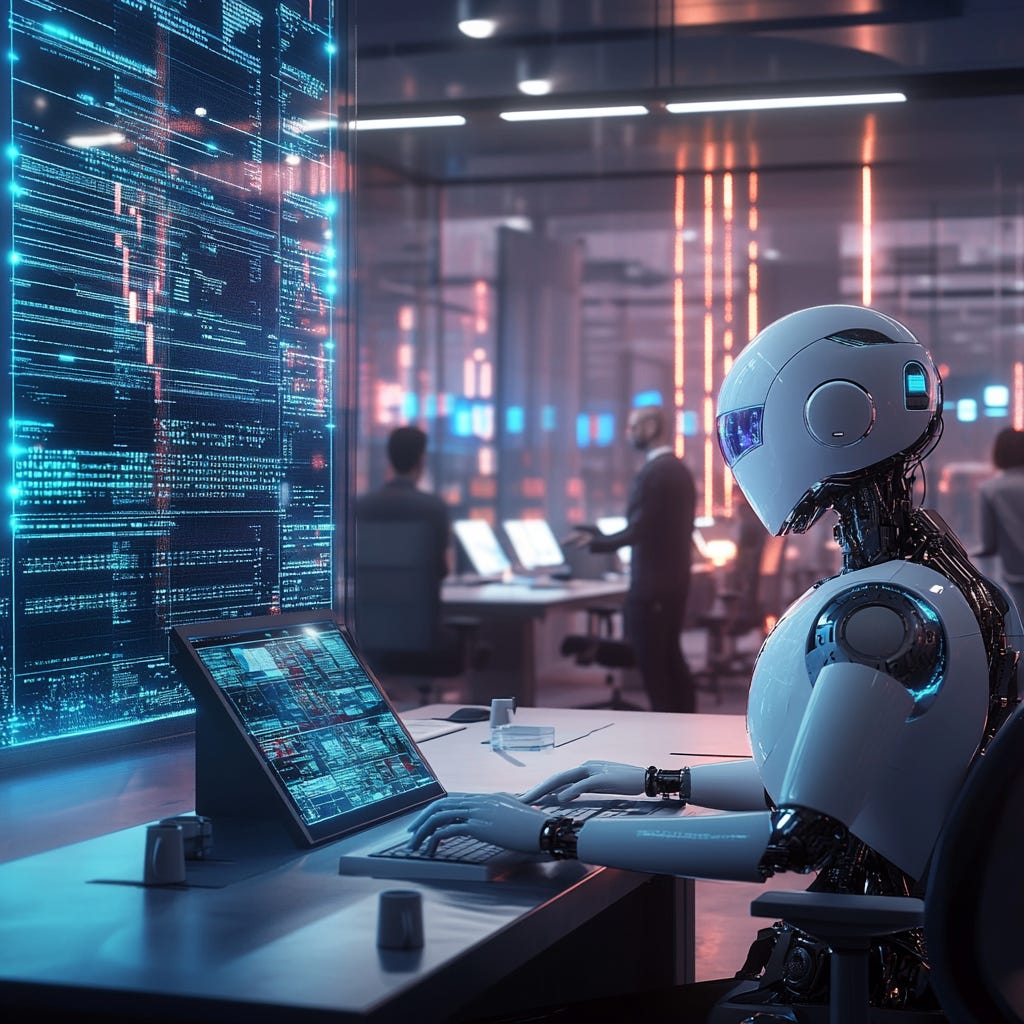
Recently, Matt Garman, the CEO of Amazon Web Services (AWS), sparked significant debate during a leaked “fireside chat” where he suggested that in just two years, human developers might need to shift their focus away from traditional coding as AI coders take the reins. While Amazon insists this wasn’t a “warning,” Garman’s comments have understandably unsettled many in the tech world, highlighting the looming question: Could AI truly replace human coders?
The Inevitable Shift: Why AI Could Take Over Coding
Garman’s perspective isn’t without merit. AI’s rapid advancements, particularly in natural language processing and machine learning, have made it increasingly possible for AI to handle tasks that once required human expertise. We’ve seen this with other professions that have faced obsolescence due to technological advancements.
Examples of Careers Rendered Obsolete by New Tech:
Telephone Operators: The switch to automated telephone exchanges made the once-ubiquitous job of telephone operator nearly extinct.
Travel Agents: With the advent of online booking systems, the demand for traditional travel agents has significantly diminished.
Typesetters: The rise of digital publishing tools has replaced the manual work of typesetting, which was once a specialized and vital skill.
These examples illustrate how technological shifts can drastically alter the job landscape. Coding, as we know it, might be the next frontier.
Industry Voices: What Other CEOs Are Saying
Garman is not alone in predicting AI’s impact on coding. Prominent figures in the tech industry have echoed similar sentiments:
Elon Musk has long warned that AI could surpass human capabilities in various domains, including software development, rendering traditional coding roles less critical.
Matt Welsh predicts that the future of programming might involve “training” AI rather than writing code, relegating human coders to more of a supervisory role.
Bill Gates acknowledges AI’s potential to automate coding but emphasizes that human creativity and problem-solving will remain irreplaceable.
Sam Altman and Andrew Ng also see a future where AI plays a significant role in programming but stress the need for human oversight and the unique value of human-driven innovation.
These perspectives highlight the growing consensus that while AI will change the nature of coding, it won’t necessarily eliminate the need for human involvement.
Preparing for the Future: Evolving Your Skills in an AI-Driven World
So, what should you do if you’re interested in coding or already working in the field? As AI continues to evolve, the demand for certain skills will shift. Here’s how you can stay relevant:
AI and ML Literacy: Gain a deep understanding of how AI and machine learning models work, including their limitations and appropriate use cases. This will be critical as AI becomes more integrated into development processes.
System Design and Architecture: Focus on designing complex systems that AI-generated code will need to fit into. Expertise in system design, scalability, and security will become increasingly valuable.
Problem-Solving and Critical Thinking: Hone your ability to tackle complex problems creatively. AI can handle routine tasks, but human intuition and innovation will be essential for solving novel challenges.
Ethical AI and Responsible AI Development: As AI takes on more responsibilities, the need for ethical considerations grows. Developing skills in AI ethics and governance will be crucial.
Data Engineering and Management: AI relies heavily on data. Proficiency in managing, cleaning, and structuring large datasets will remain in demand as AI becomes more prevalent.
Human-AI Collaboration: Learn how to work effectively alongside AI tools. This includes not just prompting AI but also interpreting and refining its outputs.
UI/UX Design: Design skills will be vital as the need for intuitive, user-friendly AI-powered applications grows. Designers who can bridge the gap between AI functionality and user experience will be in high demand.
Domain Expertise: Deep knowledge in specific domains, such as healthcare or finance, will remain critical. AI can generate code, but ensuring its relevance and accuracy requires domain expertise.
Soft Skills: Finally, don’t underestimate the importance of leadership, communication, and project management. As teams increasingly work on AI-driven projects, these skills will be essential for success.
Embrace the Change, Don’t Fear It
The potential for AI to take over coding may seem daunting, but it also presents an opportunity. By evolving your skill set and focusing on areas where human creativity and judgment are irreplaceable, you can stay ahead of the curve. The future of coding might be different, but with the right preparation, it can be just as rewarding.