

Apple's AI Ambitions Collide with EU Regulations: A Tech Giant's Tightrope Walk
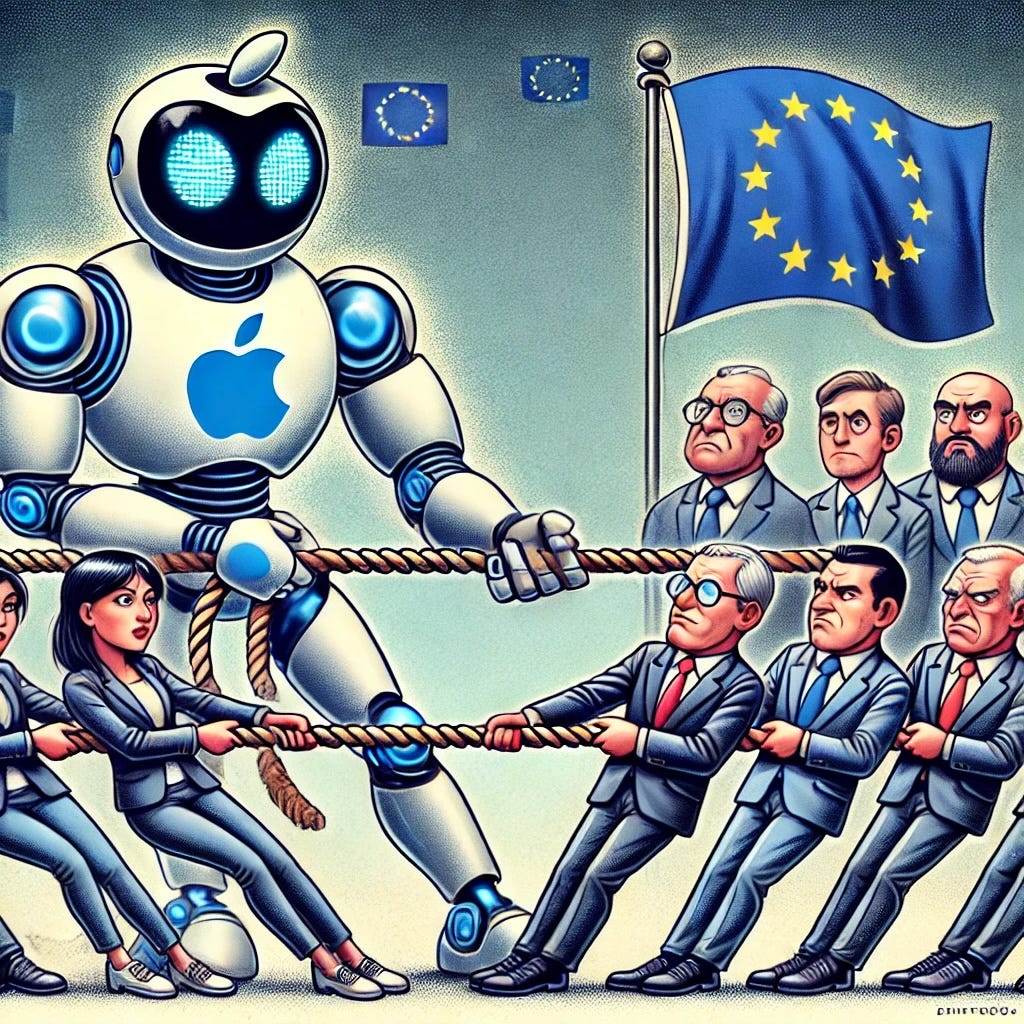
As iOS 18 unveils groundbreaking AI features, Apple's decision to skip the EU market reveals the complex dance between innovation and regulation.

Dear Tech Enthusiasts and Policy Wonks,
Imagine a world where your iPhone can generate personalized emojis, predict your next move, and even write your emails for you. Sounds exciting, right? Well, that's exactly what Apple promised with its latest iOS 18 reveal, featuring the cutting-edge "Apple Intelligence" suite. But here's the plot twist: if you're in the EU, you'll have to keep imagining, because these features won't be coming to your neighborhood anytime soon.
Why, you ask? Welcome to the labyrinth of EU tech regulations, where innovation meets red tape in a high-stakes tango.
Apple's EU Regulatory Greatest Hits:
1. The App Store Antitrust Tango (2020): EU regulators put on their detective hats to investigate whether Apple's App Store was playing favorites.
2. The "No, You Can't Have My Data" Waltz (2016): Remember when Apple refused to unlock an iPhone for law enforcement? The EU raised an eyebrow.
3. The USB-C Cha-Cha (2024): Apple finally had to ditch its Lightning port, begrudgingly joining the USB-C dance party.
Now, you might be thinking, "Geez, does the EU have a regulation for everything?" Well... kind of. But before we roll our eyes at bureaucracy, let's dive into why Apple's AI might be setting off alarm bells in Brussels.
The EU AI Act: A Regulatory Rubik's Cube
I've spent countless coffee-fueled nights poring over the EU AI Act so you don't have to. Here's what might be keeping Apple's lawyers up at night:
Picture Siri planning your entire vacation. Sounds convenient, right? But under EU rules, Siri would need to ask for permission at every turn. "Hey, can I check your calendar? Your emails? Your bank balance?" Suddenly, your AI assistant sounds more like an overenthusiastic intern.
The "Explain Yourself, AI" Clause:
The EU wants AI to be as transparent as your grandma's gossip. If Apple's Photos app starts suggesting edits, it better be ready to explain why it thinks your selfie needs more "pizzazz."
Biometric Data Boogie:
Voice recognition? Face ID? In the EU, that's more regulated than a nuclear power plant. Apple would need Fort Knox-level security and more consent forms than a doctor's office.
The "High-Risk, High-Scrutiny" Shuffle:
Health features like the Vitals app? That's entering "high-risk" territory. Apple would need more safety checks than a space shuttle launch.
The "No Bias" Ballad:
If Apple Music's AI starts favoring certain artists, it better have a good explanation that doesn't involve race, gender, or how much it likes disco.
The "No Subliminal Messaging" Mambo:
Targeted ads based on AI analysis? Better make sure they're not sneakier than a cat burglar, or the EU will cry foul.
Why This Matters (Even If You're Not in the EU):
It's shaping the future of AI globally. What happens in the EU doesn't stay in the EU.
It's a masterclass in balancing innovation with ethical concerns. Grab your popcorn, tech ethicists.
It could create a "tech divide" between regions. EU users might find themselves in the AI slow lane.
The Bigger Picture:
Apple's cautious tango with EU regulations is more than just corporate drama. It's a glimpse into the future of tech governance. As AI becomes more integrated into our lives, the line between helpful and invasive gets blurrier. The EU is trying to draw that line with a thick, regulatory marker.
For tech companies, navigating this landscape is like playing 4D chess while blindfolded. For consumers, it's a reminder that behind every cool feature is a complex web of ethical and legal considerations.
So, the next time you ask Siri for a joke, remember: in another part of the world, that simple request might be tangled in a web of regulations thicker than a bowl of cold AI-generated spaghetti code.
The Silver Lining: EU's Push for Ethical and Safe AI
While we've had some fun poking at the complexities of EU regulations, it's crucial to recognize the noble intentions behind the EU AI Act. In an era where AI is evolving faster than we can say "machine learning," the EU is taking a proactive stance to ensure that this powerful technology remains a force for good.
Championing Ethical AI: The EU AI Act isn't just about restrictions; it's about building trust. By demanding transparency and explainability, it's pushing for AI systems that we can understand and trust, rather than black boxes making decisions about our lives.
Protecting Fundamental Rights: At its core, the Act aims to safeguard our fundamental rights in the digital age. From preventing discriminatory outcomes to protecting privacy, it's setting a global standard for AI that respects human dignity.
Fostering Innovation Responsibly: While it may seem paradoxical, these regulations could actually drive innovation. By setting clear guidelines, the EU is challenging tech giants to develop more sophisticated, ethical AI solutions. It's not about stifling creativity, but channeling it responsibly.
Preparing for the Future: As AI becomes more integrated into critical sectors like healthcare and finance, having a robust regulatory framework isn't just nice-to-have; it's essential. The EU is essentially future-proofing its digital ecosystem.
Global Influence: Just as GDPR set a global benchmark for data protection, the EU AI Act could become the gold standard for AI governance worldwide. It's potentially shaping a future where ethical AI is the norm, not the exception.
In essence, while Apple and other tech giants might be scratching their heads over compliance, the EU AI Act is advocating for a future where AI enhances our lives without compromising our values. It's a bold vision of technology serving humanity, not the other way around.
So, the next time you hear about AI regulations, remember: it's not just bureaucratic red tape. It's an attempt to ensure that as we leap into the AI future, we're doing so with our ethics intact and our rights protected. And in a world where AI is becoming increasingly powerful, that's something we can all get behind.
After all, in the grand chess game of technological progress, the EU is trying to make sure we don't sacrifice our pawns – or our queens – in the pursuit of the king.
Stay curious, stay ethical, and keep embracing the AI revolution – just make sure to read the terms and conditions first!
Deriq
P.S. What are your thoughts on balancing AI innovation with ethical concerns? Drop a comment below – let's keep this conversation going. And don't forget to subscribe for more insights into the wild world of tech and policy!
What an insightful article on Apple's AI features and the challenges posed by EU regulations. Thanks!! Your clear and engaging explanation of the EU AI Act's impact on innovation, privacy, and ethical AI development was exceptional.
I must say, this is my best read from you thus far. Your talent for making complex regulatory issues accessible while emphasizing their global significance is truly commendable. Good job 👏🏾👏🏾